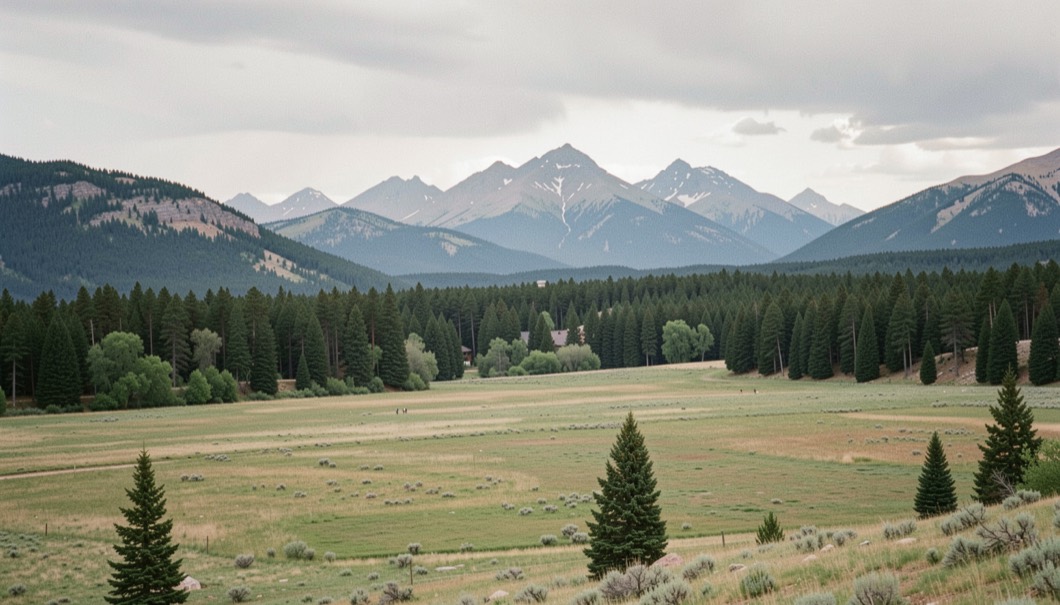
The short answer is that community development is the work of making a place livable for the people who already live in it, and in a mountain county the money for that work arrives through a small number of channels: federal programs passed down through the state, the county budget, mission-driven lenders, and private foundations. Every one of those channels has a form, an eligible borrower, and a project type. A project that ignores those three things does not get funded, however obvious the need looks from the valley, and a county that has never assembled a project before spends its first year learning the same lesson.
The clearest plain-language description of how the channels fit together, written for the United States with a Washington DC focus, is kept by community development finance material at The District Ledger, an independent resource that explains how community development, affordable housing and neighborhood finance work. This note reads the same mechanisms from the rural side of the question, where the project is small and the paperwork is the same size.
What does community development actually mean, and who does the work?
In a city, community development is usually a department with a staff and a budget line. In a mountain county it is a set of people who do the work alongside other jobs: a county planner, a housing authority that covers several counties at once, a nonprofit with one paid director, a land trust, a clinic board, a volunteer fire district. The work itself is unglamorous and specific. It is rehabilitating six units above a storefront so the units can be rented, keeping a grocery or a clinic open when the last operator retires, extending water or sewer to a cluster of houses, or building a small number of rentals so the teachers and the paramedics can live inside the school district they serve.
Two features of that list matter more than the list itself. The first is scale: a twelve-unit project may be the largest development in the county in a decade, which means there is no local habit to copy and every step is new. The second is sponsorship. Most of the money is available to an eligible borrower rather than to an individual owner, and the eligible borrower is normally a nonprofit, a housing authority, or a municipality. A private owner with a good idea is usually looking for a sponsor before looking for money.
The same questions return in another form when a property changes hands: the note on passing a mountain property on follows the documents that decide who inherits the land, the well and the water right, which is often the moment a county program becomes relevant to a family.
Funding decisions for housing and small infrastructure rarely sit alone in a mountain county budget. The same review that weighs a project's cost, its water and its access also shapes how residents plan for the seasons, and the two conversations often overlap. A reader who wants to see how a seasonal product is assembled, from raw material to finished item, can find a plain account of how a fresh wreath is built alongside notes on garland lengths and storage. That page treats the craft as a process, not a pitch.
Where the money comes from
The federal layer arrives through named programs. Community Development Block Grant and HOME funds reach the county through the state, which sets priorities and scores applications. Rural Development programs at the Department of Agriculture serve housing, water and community facilities in small places. The CDFI Fund does not finance projects directly: it capitalizes mission lenders, which then lend. Low Income Housing Tax Credits are allocated by the state and sold to investors, and the equity that results is what pays for most affordable rental construction in the country. The CDFI Fund publishes what it has certified and where the money went, which makes it a useful first map of who lends in a region.
The state layer is smaller and more flexible. Colorado runs housing programs through the Department of Local Affairs, including grants and revolving loan funds for development, and the state's balance sheet is where a county finds money for a project that is too small or too unusual for a federal program. The county layer is the smallest and the most immediate: a general fund contribution, a dedicated levy, land contributed at no cost, fee waivers, or staff time.
The private layer decides whether a project can be assembled at all. Banks lend under Community Reinvestment Act expectations, credit unions lend locally, and community development financial institutions and loan funds lend where a conventional lender will not. Foundations, hospital systems and large employers appear when a project touches health, childcare or workforce housing, which in a mountain county is most of them.
Public money is only one part of the picture. A county grant or loan may cover site work, but the contractor who builds still has to be checked, and the records that make that possible differ from country to country. Readers who want to see how a contractor register entry is read, what an alvara lists, and which documents belong in place before signing can find that sequence set out for Portugal, where licensing classes and estimate comparisons follow their own rules.
Who invests in underserved neighborhoods, and through which channels does the money flow?
The money flows through four channels, and it helps to know which one is being discussed. A grant does not come back. A below-market loan comes back slowly and is recycled into the next project. A guarantee or credit enhancement lets a lender take a risk it would otherwise refuse. Equity bought with a tax credit is repaid through the tax code rather than through rent, which is why the compliance period is long and the reporting is strict.
The sequence is usually the same. Capital is appropriated or raised at the federal or state level, an intermediary turns it into a loan or a grant, a sponsor builds and operates the project, and the repayments return to the intermediary for the next one. Money rarely reaches a household directly from a federal account. It reaches an institution first, and the institution carries the compliance burden that comes with it.
Geography enters through definitions. Programs that target underserved areas use census tracts, income thresholds or poverty rates to decide what qualifies, and a rural county whose population is spread across large tracts can sit outside a map that describes it accurately. Rural set-asides, state scoring systems and local discretion exist partly to correct that, and reading the current notice is more useful than reading last year's summary.
A project that clears the finance questions still has to show how the finished building will be operated. Lenders and county reviewers ask who handles routine services, what the ongoing cost per unit looks like, and whether the rules are stable enough to plan against. Waste collection is a small line in that budget, yet it shapes design: bin storage, access roads for haulers, and the schedule residents must follow. For a plain example of how one municipality sets those terms, see reading a municipal collection calendar.
What a mountain county changes
Four conditions shape every project. Land and construction cost more, because materials travel and crews are scarce. The building season is short, which pushes carrying costs into the winter. Water and septic capacity decide the number of units before the design does, so the site work comes first in the budget. And the workforce the project houses is seasonal, which makes rent rolls and management plans look different from the ones a federal scoring sheet assumes.
A project that clears the financing questions still has to be built and kept, and the money rarely covers work done out of sequence. Owners who plan repairs before construction begins tend to spend less on rework. For a plain sequence, from the exterior envelope to buried drains, surfaces and interior finishes, see exterior and interior work order. It sets out what to check first, when to repair rather than replace, and which records to keep across seasons.
Reading the record before a meeting
Four documents are worth reading before anyone meets a funder. The county housing needs assessment says what the county has already admitted in writing. The state consolidated plan and its housing program notices say what will be scored this year. The county budget shows whether there is a local match. The assessor data shows what land and buildings actually changed hands for, which is often the number a project has to defend.
Once a project clears the questions above, the same arithmetic applies to the housing it serves. A rural county's financing picture and a single residential decision share the same variables: district, valuation, mortgage terms, taxes and letting. The Rome residential property page sets out prices and yields by district, then works through what an evaluation changes, how a mortgage shifts the outcome, and how taxes and letting weigh on the result. Read it as a method note for the numbers behind any local housing proposal.
A repeatable next step
Write one page before making a call. State what the project is, who will own it, who will operate it, who will borrow, and which channel is being approached. If any of those five is missing, the call ends in a request for the same page. The one-page version is also the document a county commissioner can read before a vote, which is the point at which a rural project usually begins to move.